I started as a designer.
Before I wrote production code, I designed interfaces: layout, type, spacing and motion. I still start most work with a sketch. The curve above describes how something moves over time.
Senior product engineer. I design and build web products, and help decide what goes in them.
Five projects, all live.sheet {
translate: 0 100%;
transition: translate 600ms
cubic-bezier(0.22, 1, 0.36, 1);
}
.sheet.open { translate: 0 0; }Before I wrote production code, I designed interfaces: layout, type, spacing and motion. I still start most work with a sketch. The curve above describes how something moves over time.
Front end first, then years of Webflow, where I designed, built and fixed every site myself. Now mostly TypeScript, React, Astro and TanStack. As you move the handles, this CSS updates to match.
As a senior product engineer I help decide what to build and what to leave out, plan how we will measure it, and write the code. The sheet on the phone opens with the curve you drew.
Open EaseSame five projects, told in motion. The curve you drew above times all of it: the sunset in Meridian, a client’s choices in Handshake, the cuts to a plan in Scope. Change it, and the whole page moves differently.
Designed and built by me, free to use, each at its own address. Three are craft pieces that focus on detail. Two are products that focus on what to build.
A motion curve studio. Shape a bezier or a spring, watch it move real interface, and export CSS that runs exactly as you saw it.
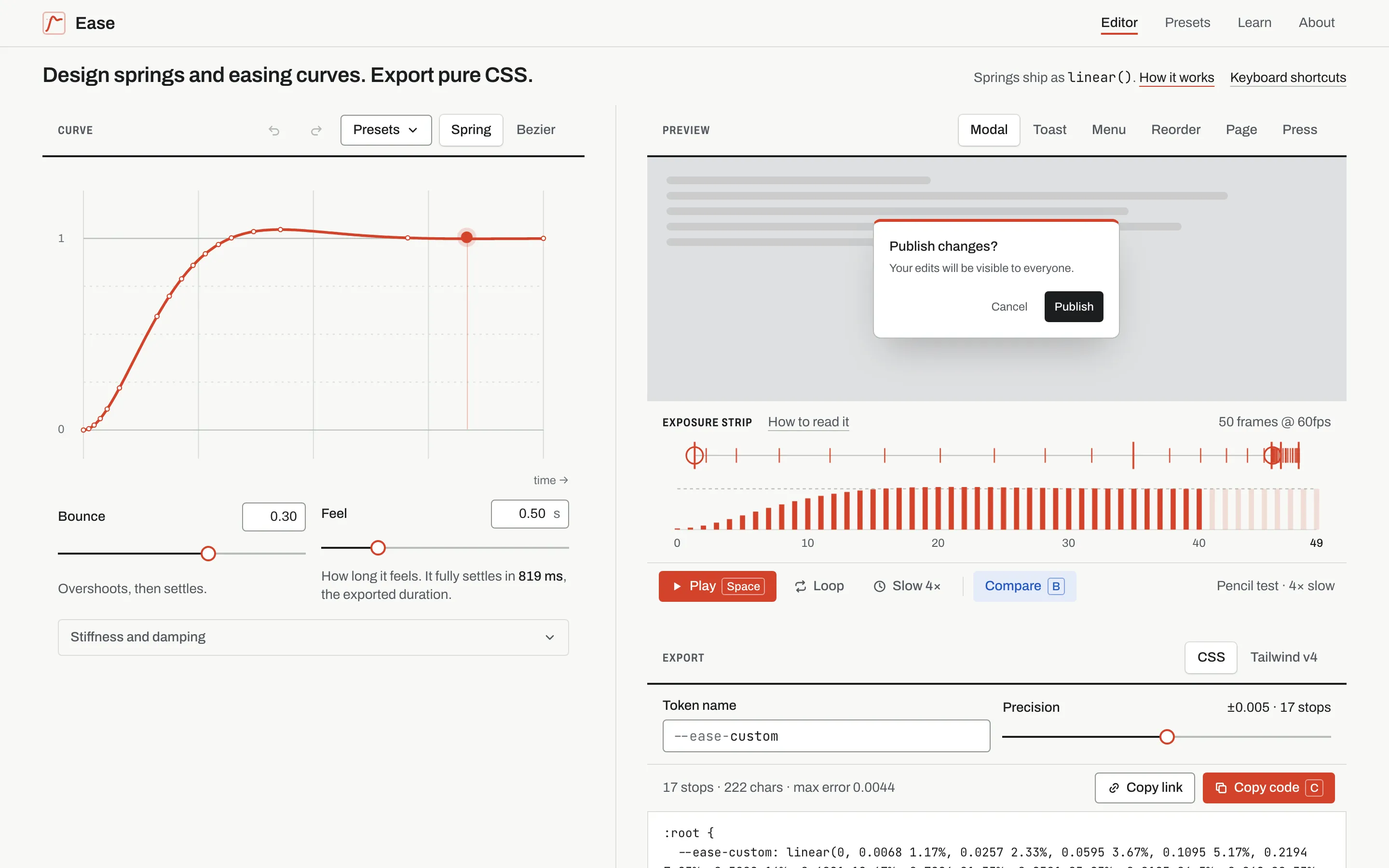
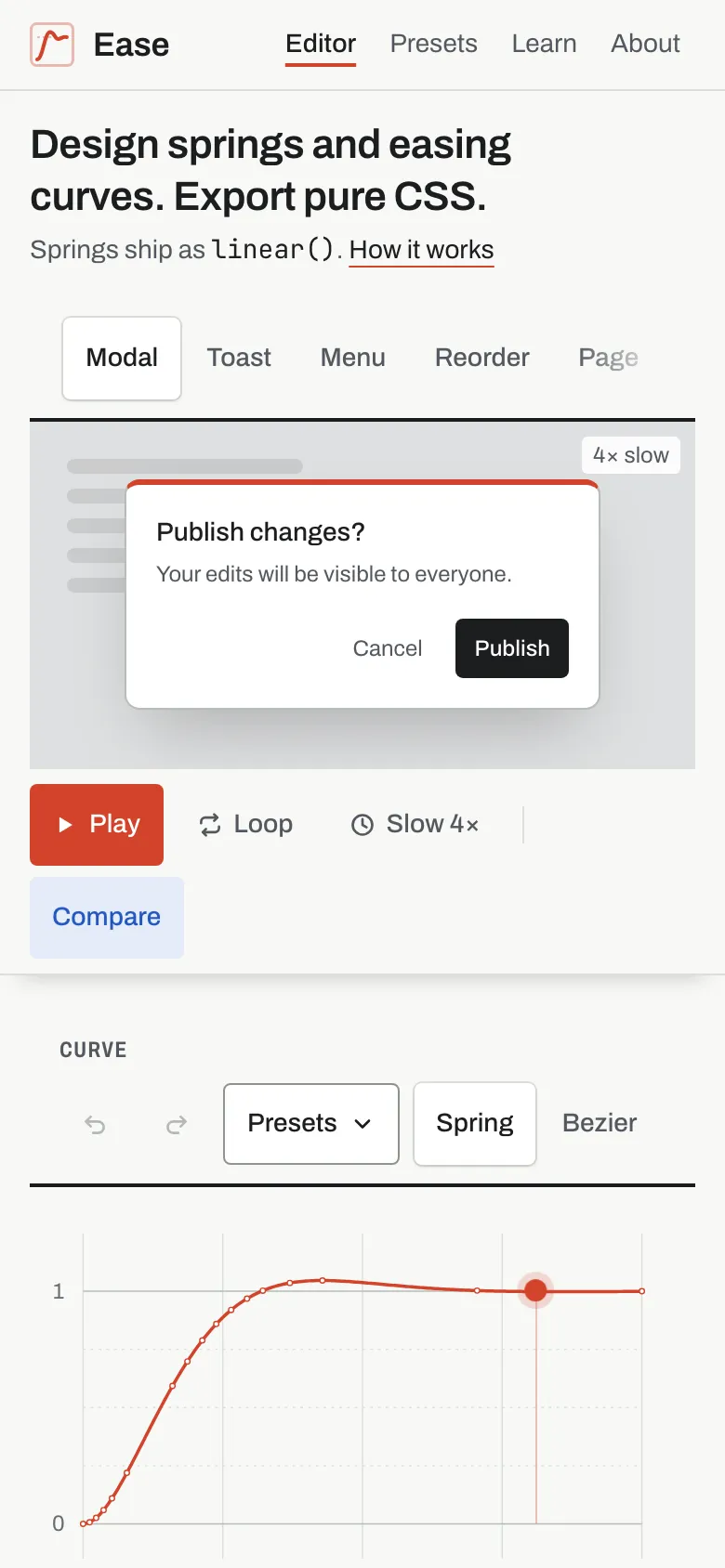
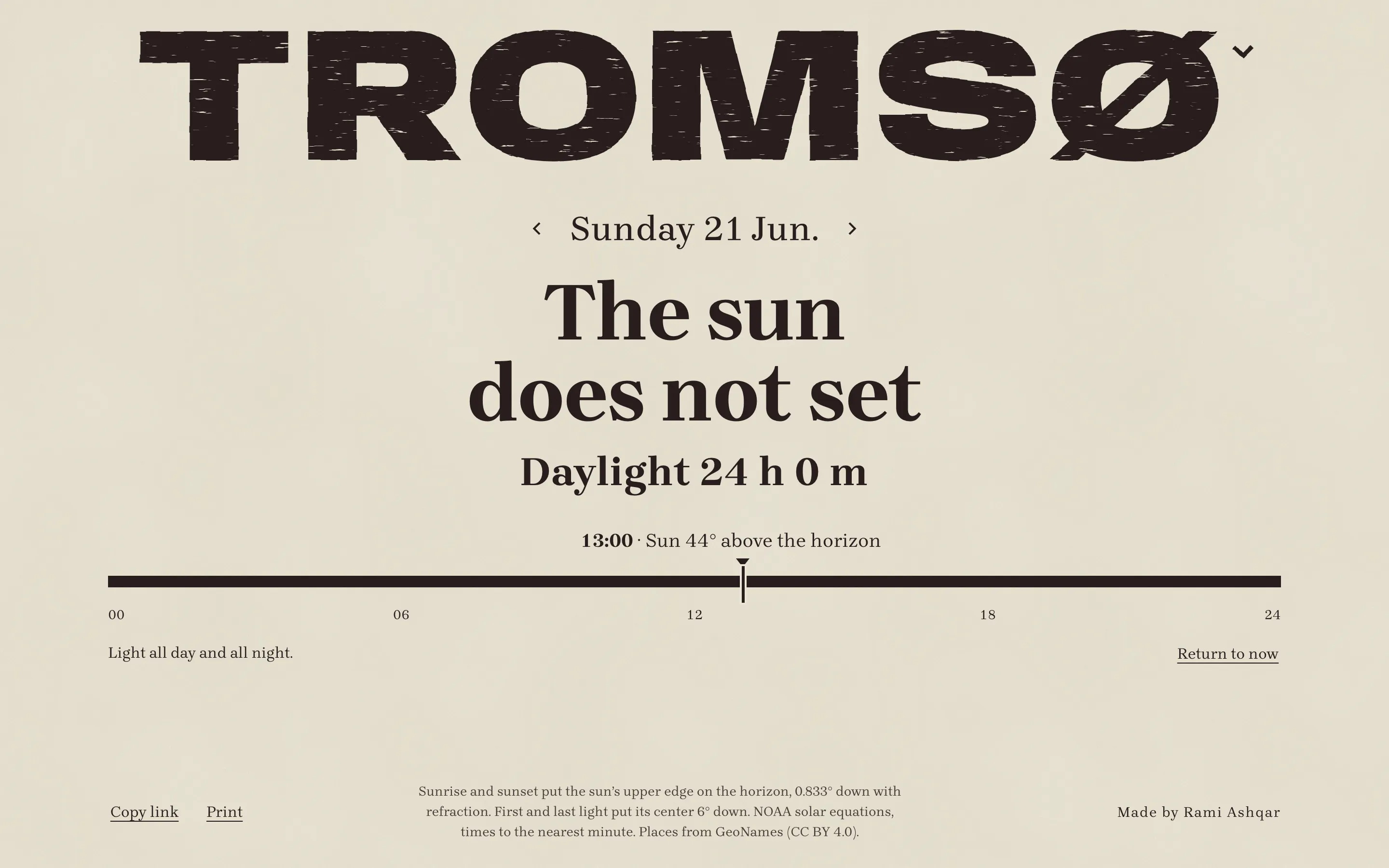
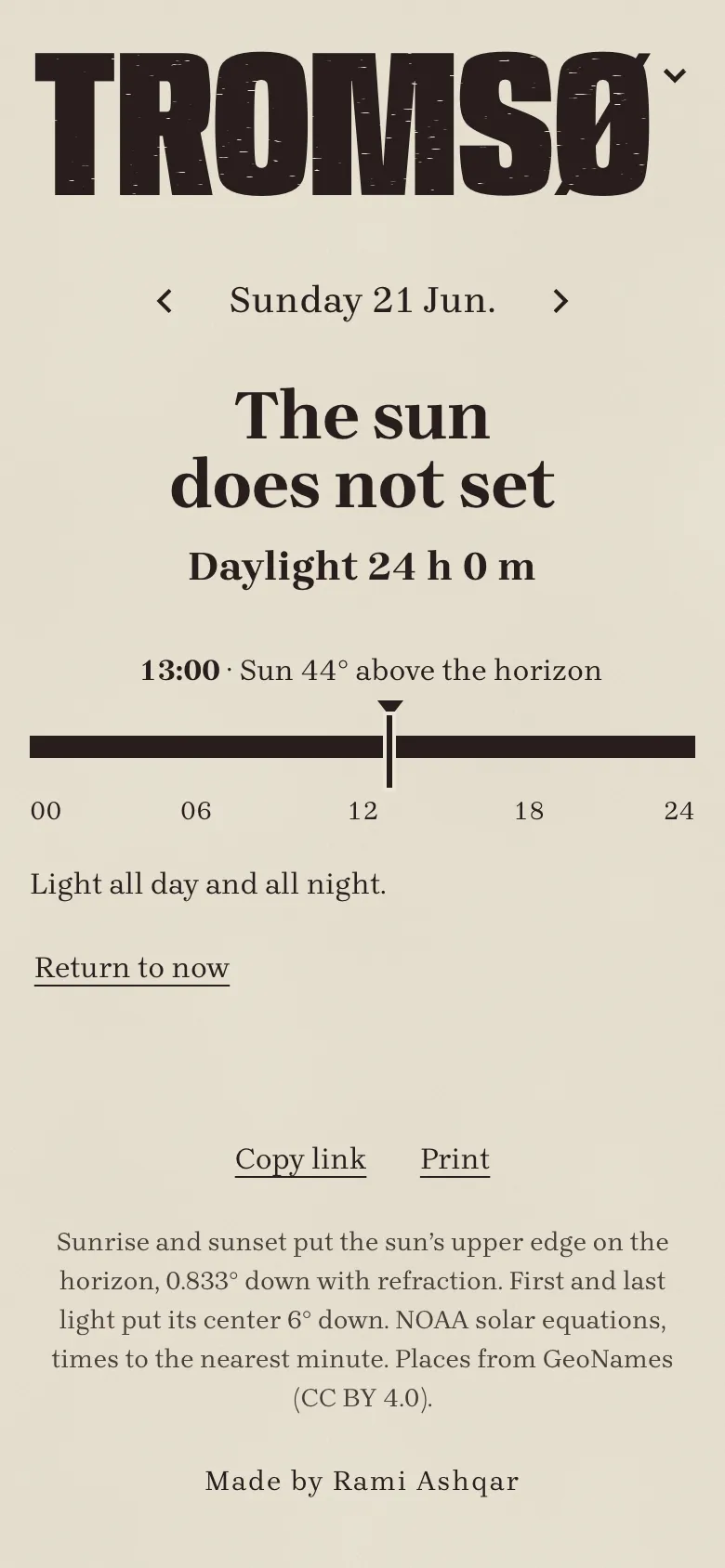
A page of today's light for any city, set like a letterpress broadside. The sun's position is calculated in your browser.
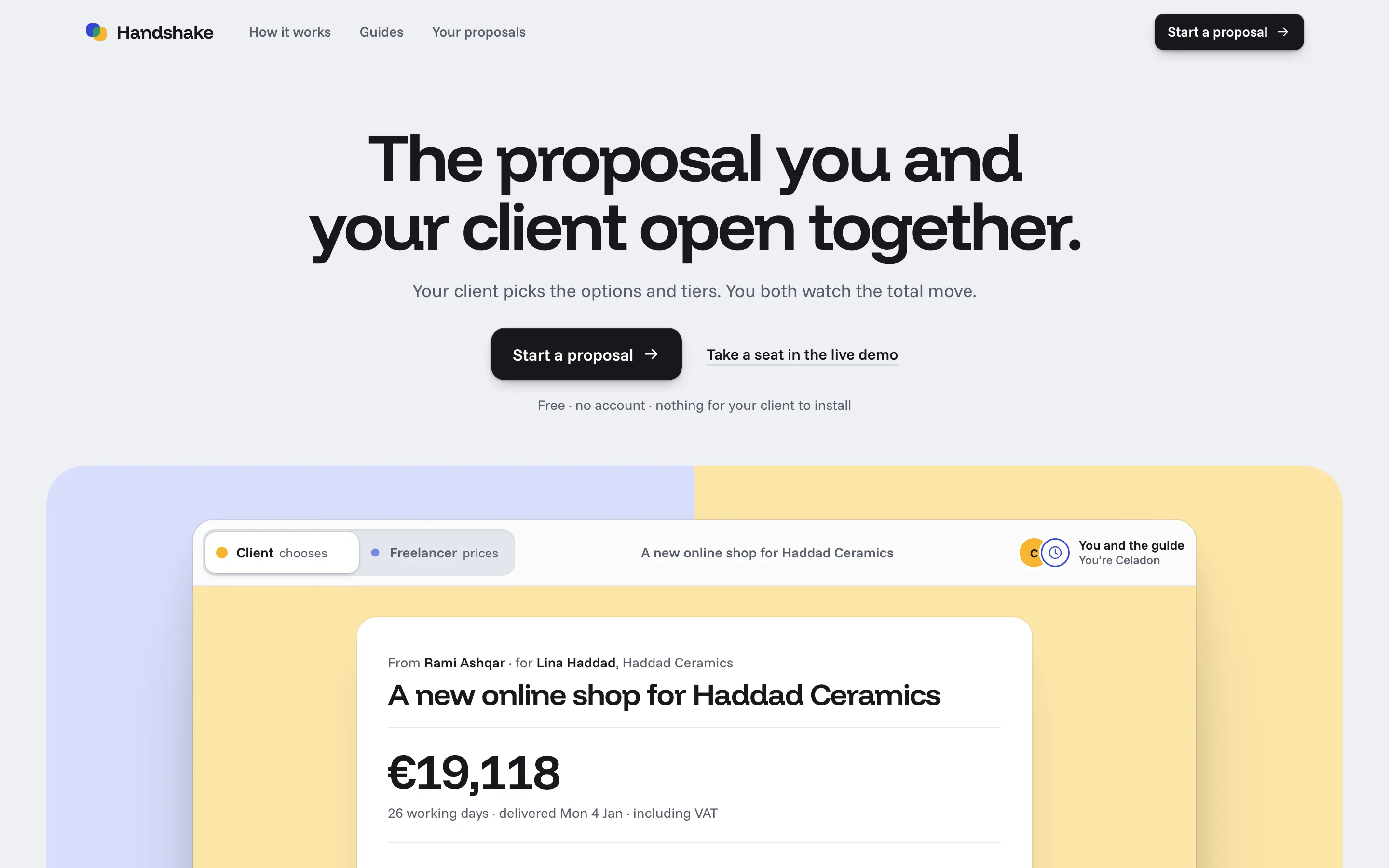
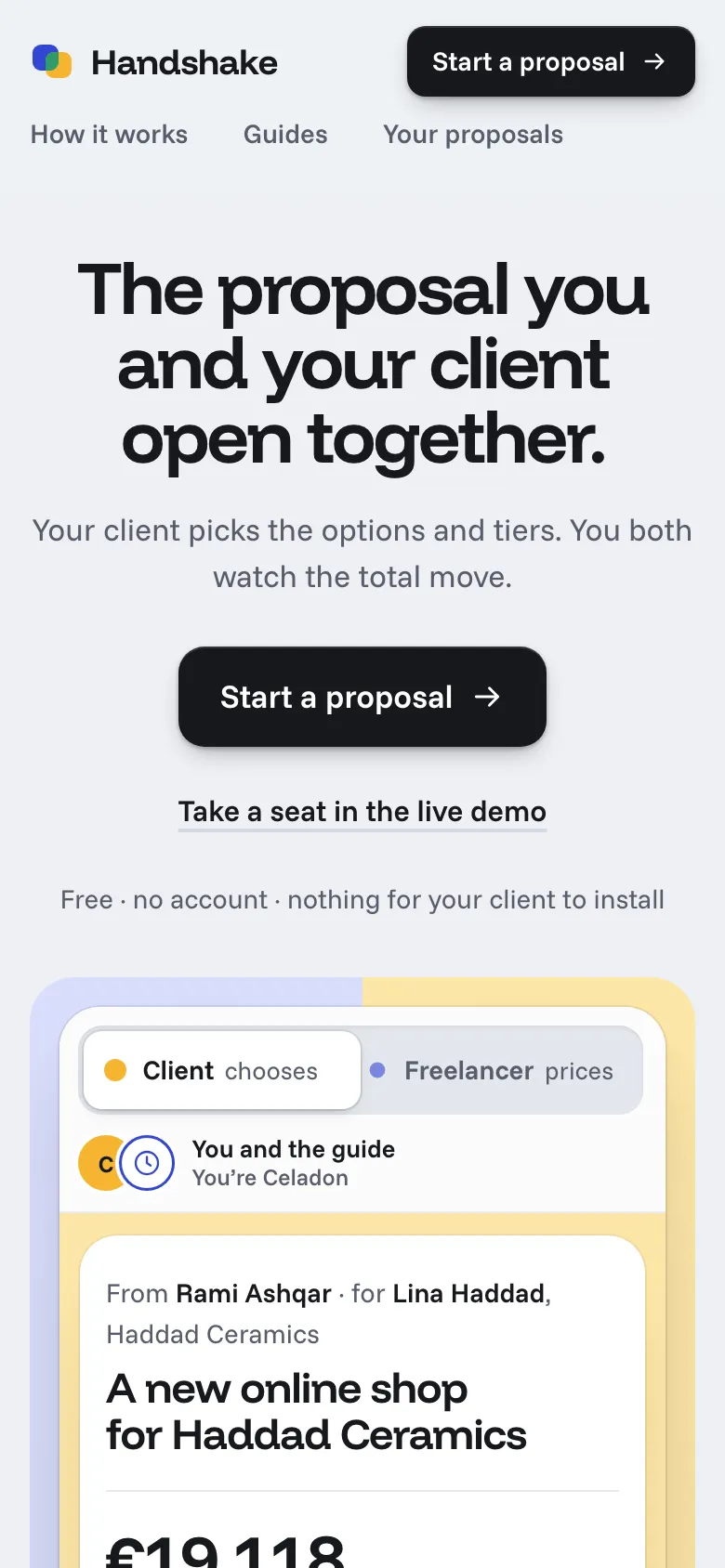
A proposal you and your client open together. They switch the work on and off; the price and the date move for both of you.
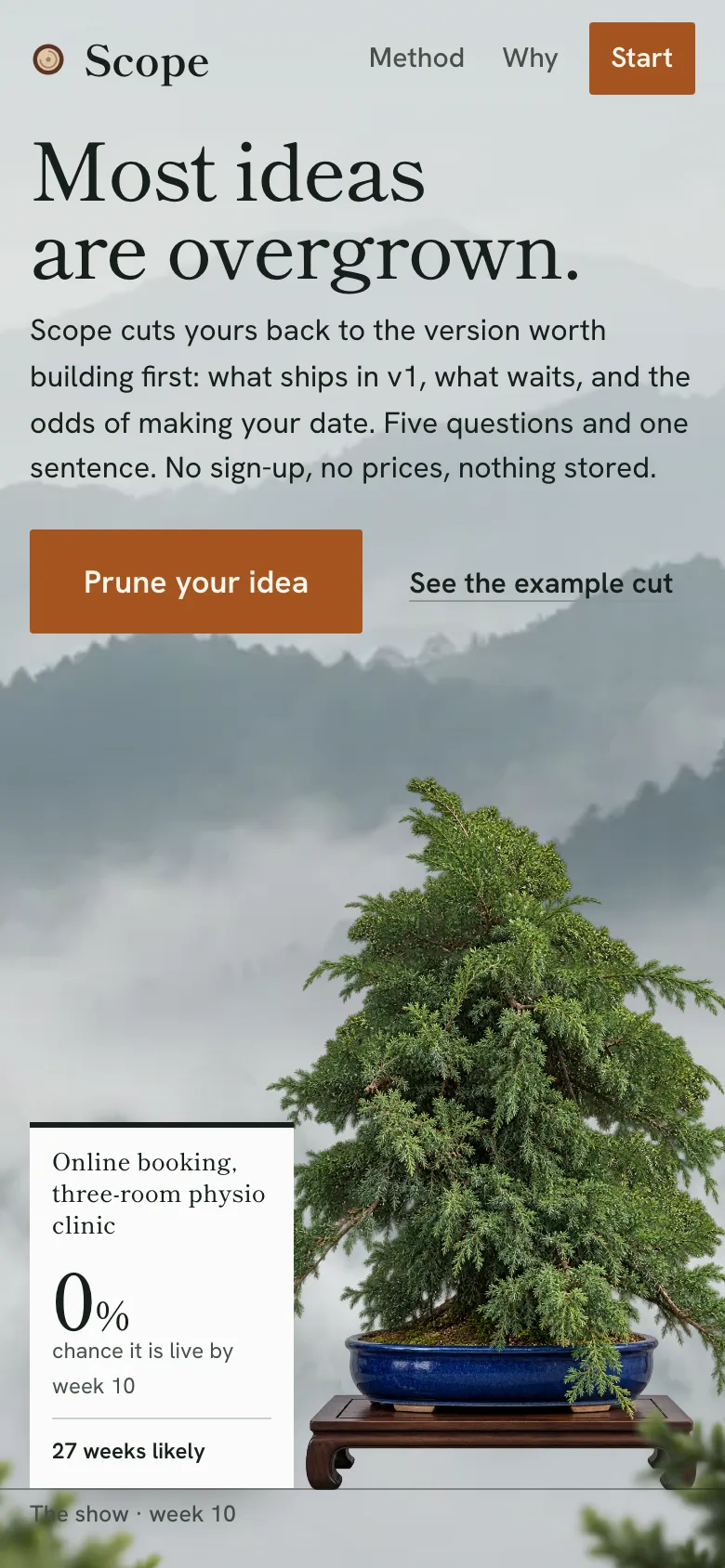
Bring a fuzzy product idea. Leave with the smallest version worth building, the odds of making your date, and a one-page brief.

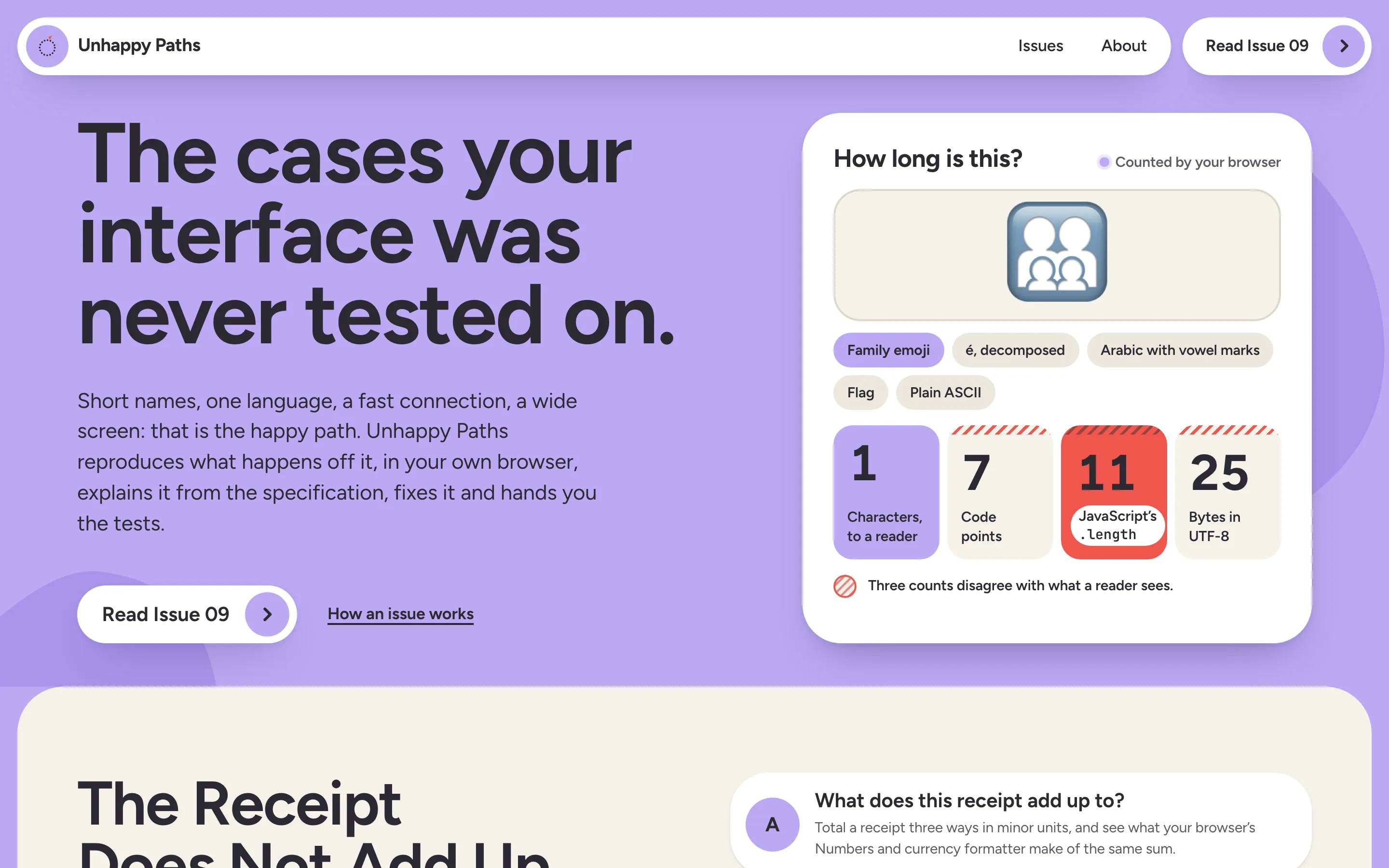
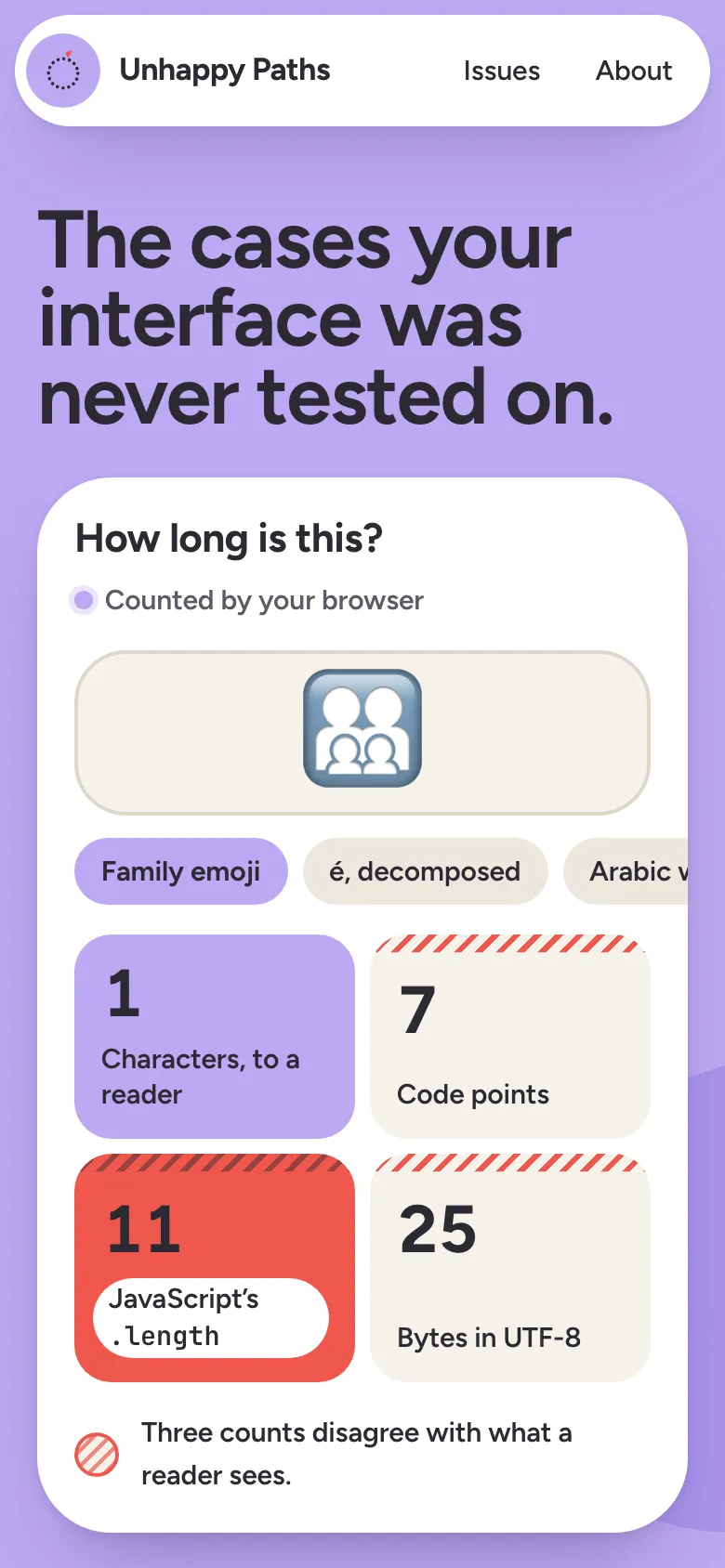
A field guide to the edge cases interfaces meet in the real world. Each issue reproduces one in your own browser, explains it from the specification, fixes it in production code and hands you the tests.
Four habits, each with an example from the projects above.
In Scope’s example, a clinic’s full wishlist is likely 27 weeks, with a 0% chance of its 10-week date. A smaller first version is 9 weeks, with a 70% chance. Scope is built around that conversation.
Scope case studyHandshake passed its design review, then confused its first real user. I rebuilt the screens around what people came to do and left the tested sync engine alone.
Handshake case studyMeridian loads one city per time zone up front and the other 11,615 only when you search. That took first-paint JavaScript from about 530 kB to 90 kB.
Meridian case studyEvery preview in Ease runs the exact timing string it exports, so the motion you approve is the one users get.
Ease case studyMost of my work is for teams, on products that aren’t public. It usually involves:
I take on a few projects at a time: products, apps and sites, start to finish. Tell me what you have in mind and when you need it.